
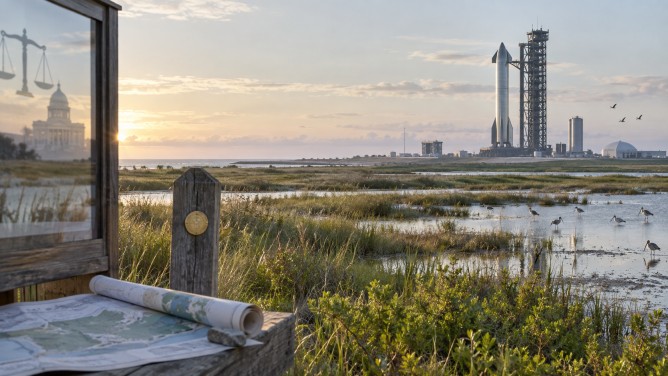
The proposed land exchange between the Trump administration and SpaceX is set to go forward, with a federal judge ruling against a bid to halt the transfer of over 700 acres of federal wildlife refuge land in Texas. This decision opens the door for SpaceX to expand its rocket launch operations near the US-Mexico border, potentially altering the landscape of the Lower Rio Grande Valley National Wildlife Refuge.
Environmental and tribal groups had sought a preliminary injunction to prevent the land transfer, citing increased environmental risks to wildlife habitats and historical sites. However, US District Judge Fernando Rodriguez Jr. dismissed their request, stating that the plaintiffs failed to demonstrate sufficient evidence of potential harm to the land during the ongoing legal proceedings.
The contested land exchange involves SpaceX transferring 683 acres of its own land to the federal government in exchange for a portion of the 103,000-acre wildlife refuge. The US Fish and Wildlife Service has previously determined that the swap would not result in significant environmental impacts and might even enhance long-term conservation efforts by improving habitat connectivity in South Texas.
Despite the court’s decision, the environmental groups have vowed to continue their legal battle, highlighting concerns over the impact of SpaceX’s expansion on public access and the preservation of cultural and historical sites. The lawsuit challenging the legality of the land transfer remains active, keeping the future of the refuge and SpaceX’s development plans in a state of uncertainty.
Judge Rodriguez noted in his ruling that halting the land exchange could impede SpaceX’s development projects and its contractual obligations. The legal dispute continues to unfold as parties on both sides await further judicial review of the environmental and cultural implications of the proposed land swap.
