
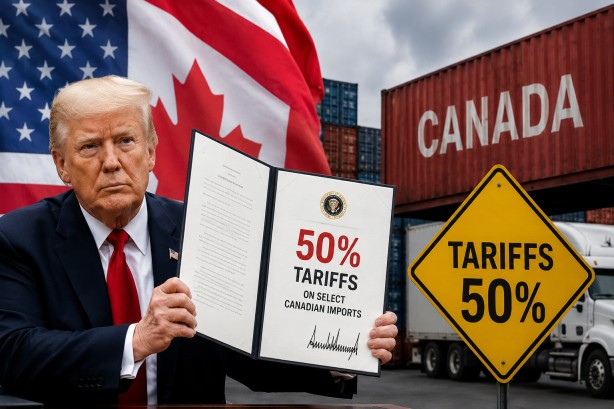
President Donald Trump has sanctioned a fresh wave of 50% tariffs on certain Canadian imports, citing perceived discriminatory practices against American goods by Canada. The newly imposed duties will affect a range of products, including automotive materials, dairy items, and alcoholic beverages. This decision has been executed through a series of executive orders, coinciding with ongoing trade talks under the United States-Mexico-Canada Agreement (USMCA).
The Trump administration asserts that these tariffs are a strategic move to counteract what it considers unfair trade practices that disadvantage U.S. industries. By implementing these measures, the administration aims to rectify trade imbalances and protect American economic interests. This development is likely to intensify the ongoing negotiations between Washington and Ottawa, as both sides strive to reach a consensus on trade and market access.
The introduction of these tariffs is expected to add a new layer of complexity to the economic relationship between the United States and Canada. Businesses and exporters on both sides of the border are closely monitoring the situation, anticipating Canada’s response and assessing the potential ramifications for North American trade.
As the situation unfolds, the focus will remain on how these tariffs impact the broader economic ties between the two neighboring countries. The response from Canada, whether in the form of retaliatory measures or diplomatic negotiations, will play a crucial role in shaping the future of trade relations in the region.
