
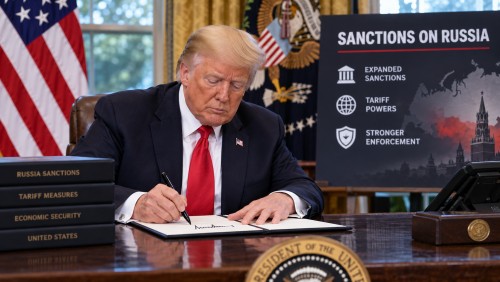
The recent expansion of U.S. sanctions on Russia could have significant repercussions for countries heavily reliant on Russian energy imports, including India and China. Under new legislation signed by President Donald Trump, the U.S. now wields the power to impose tariffs of up to 100% on nations that continue to purchase Russian energy. This move is part of a broader strategy to exert economic pressure on Russia by targeting its revenue from oil and gas exports, amid ongoing tensions linked to its military activities.
The law, which received bipartisan support in the House of Representatives before being signed into law on September 18, grants the president broad authority to enforce these measures. In addition to potentially imposing steep tariffs, the legislation also extends existing sanctions on Iran, reinforcing the U.S. stance on limiting financial support and resources to regimes it views as hostile or destabilizing.
Central to the legislation is the aim to curtail the financial networks and entities that support Russia’s military efforts. By restricting the avenues through which Russia can generate revenue, particularly from its lucrative energy sector, the U.S. hopes to undermine the economic foundations that bolster its geopolitical adversary.
The White House has emphasized that this new law strengthens the U.S.’s ability to apply economic pressure on Russia. However, the practical impact of these measures will largely depend on how the administration chooses to implement them, including which countries will be targeted and under what circumstances certain sanctions might be waived. This flexibility allows for strategic decision-making in response to evolving international dynamics and diplomatic considerations.
As the global community watches the unfolding implications of these sanctions, key players like India and China, who have substantial energy dealings with Russia, may face challenging decisions. Their response could shape not only their own economies but also the broader geopolitical landscape, as they weigh the benefits of continued energy ties with Russia against the potential costs imposed by U.S. tariffs.
