
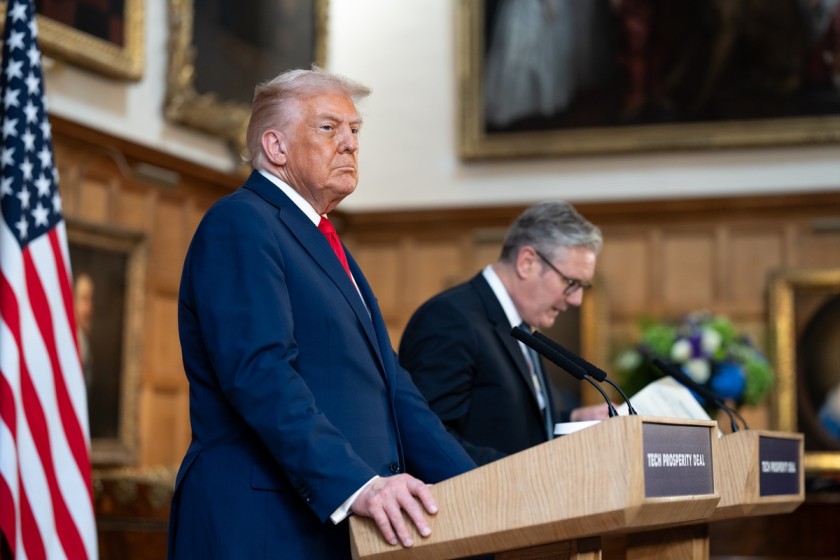
In a recent post on Truth Social, former U.S. President Donald Trump asserted that British Prime Minister Keir Starmer is on the verge of resigning, taking aim at his handling of immigration and energy policies. Trump criticized Starmer for what he described as significant failures in these areas, particularly emphasizing the need for enhanced development of North Sea oil resources. Despite the critique, Trump extended his well wishes to the British leader.
The comments by Trump coincide with a period of increasing political pressure on Prime Minister Starmer. Reports have emerged indicating that some members within the Labour Party, which Starmer leads, are raising questions about his leadership capabilities. This internal scrutiny has been amplified following a recent parliamentary election that saw one of Starmer’s political rivals gain ground, sparking renewed debates about the party’s direction and strategy.
Amid these domestic political challenges, Trump’s statements add an international dimension to the discourse surrounding Starmer’s leadership. His remarks are timed with a backdrop of heightened global political developments, as leaders around the world are concentrating on pressing geopolitical issues, including the persistent tensions in the Middle East.
The international attention on Starmer’s leadership comes as the Labour Party navigates through internal and external pressures. The party’s discussions about its future direction are intensifying, particularly in the wake of electoral results that have emboldened other political figures within the party.
Trump’s intervention in this scenario underscores the transatlantic interest in the UK’s political climate, as global leaders and observers watch closely how the Labour Party will respond to both internal dissent and external critiques. The situation reflects the broader geopolitical landscape, where domestic policies are increasingly intertwined with international commentary and influence.
