
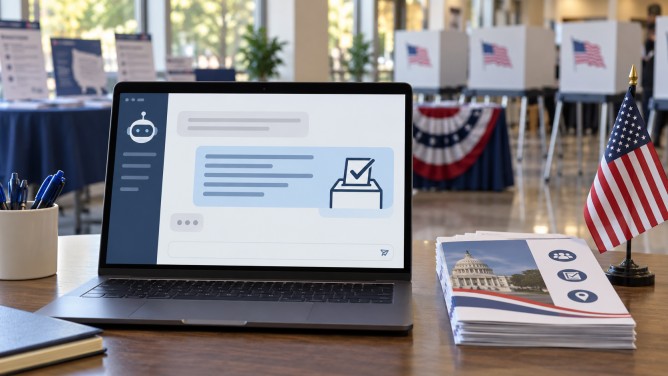
Anthropic is set to update its Claude AI chatbot with official U.S. voting information and election results in preparation for the November 2026 midterm elections. Announced on October 14, this update aims to provide users with reliable data on voting procedures, thereby reducing the potential for election-related misinformation.
The initiative will utilize data from Democracy Works, a nonprofit organization that gathers voting information from state and local election authorities. When U.S. users inquire about voting procedures, Claude will access this database to offer accurate and relevant details. This feature is anticipated to be available to U.S. users later in October, well before the electorate heads to the polls in November.
Anthropic also plans to integrate election results into the chatbot, enabling users to access information about electoral outcomes. The company has emphasized that the feature is designed to deliver factual information about voting logistics rather than suggesting candidates or advising users on voting choices.
Current data from Anthropic shows that political discussions make up about 5.75% of the 250,000 U.S. conversations analyzed on its consumer platform, while election-specific discussions account for approximately 0.51%. Requests for voting recommendations are even less frequent, representing around 0.01% of conversations. The company anticipates heightened interest in election-related questions as the election date approaches.
This update reflects broader efforts by AI companies to enhance the accuracy and reliability of information provided by their chatbots during significant political events. By incorporating data from official election sources, Anthropic aims to assist users in understanding voting procedures and accessing election results more effectively.
The November midterm elections will be crucial, determining seats in the U.S. Congress and numerous state and local positions. Through this initiative, Anthropic seeks to make Claude AI a useful tool for obtaining election-related information while minimizing the risk of AI misuse during political events.
